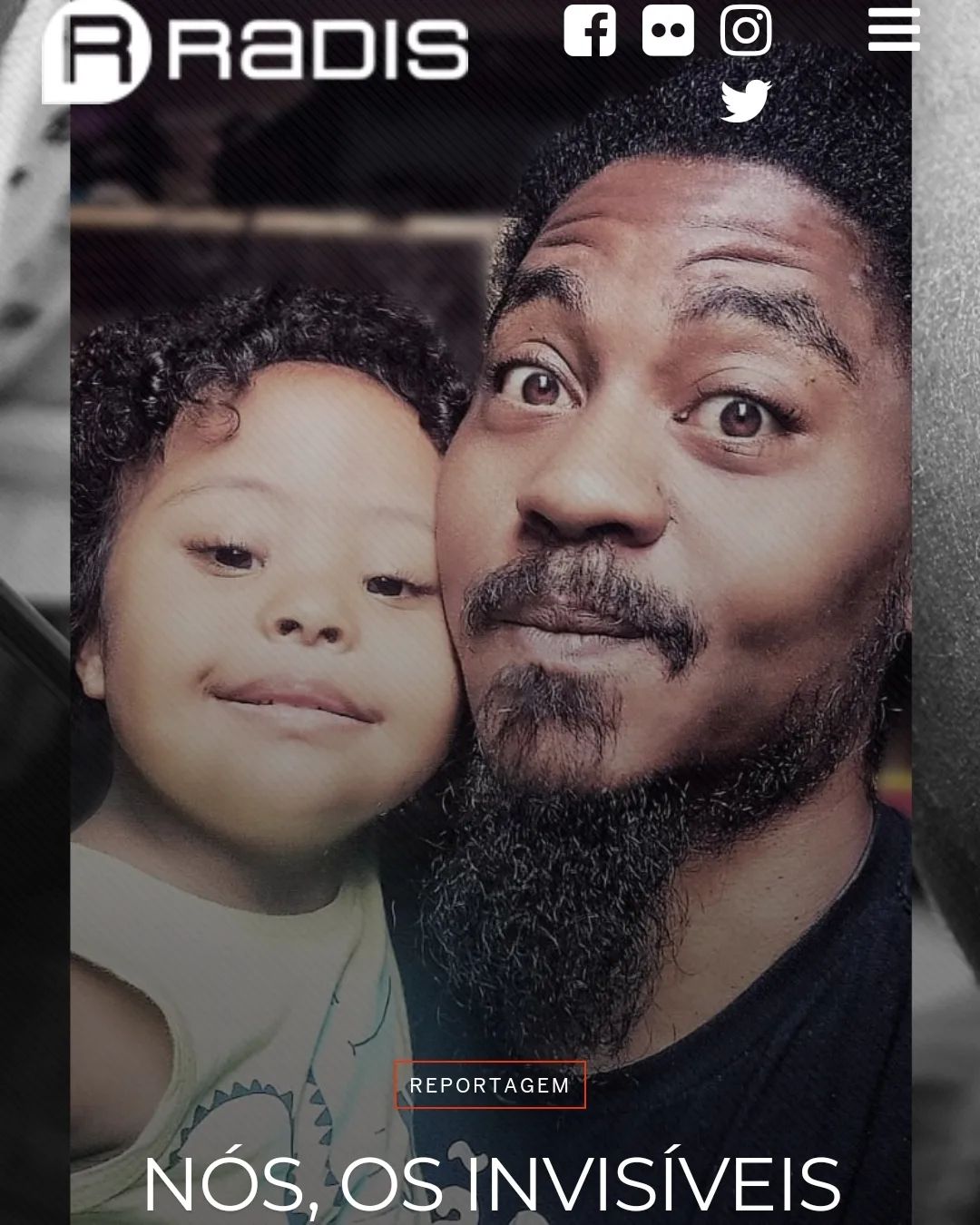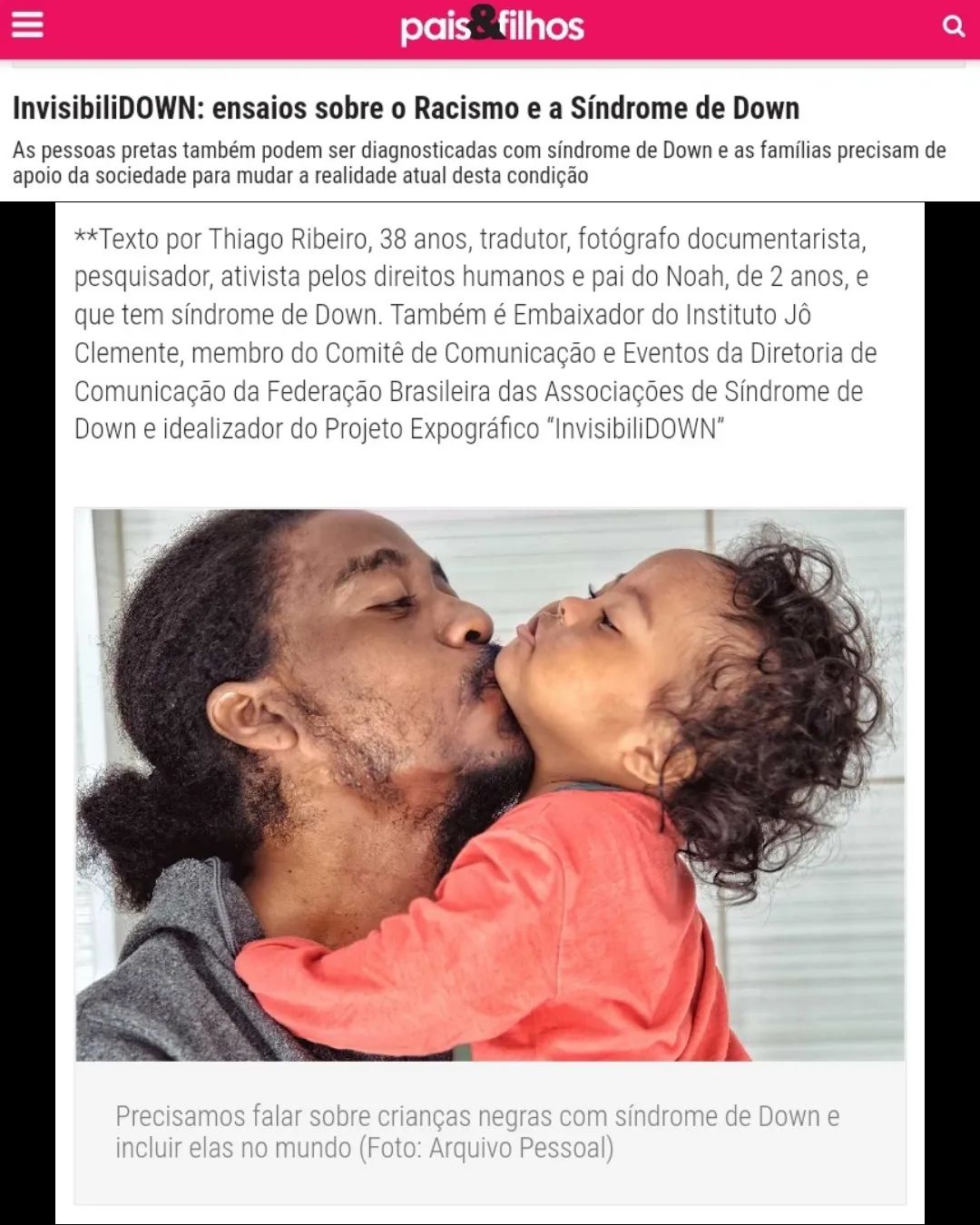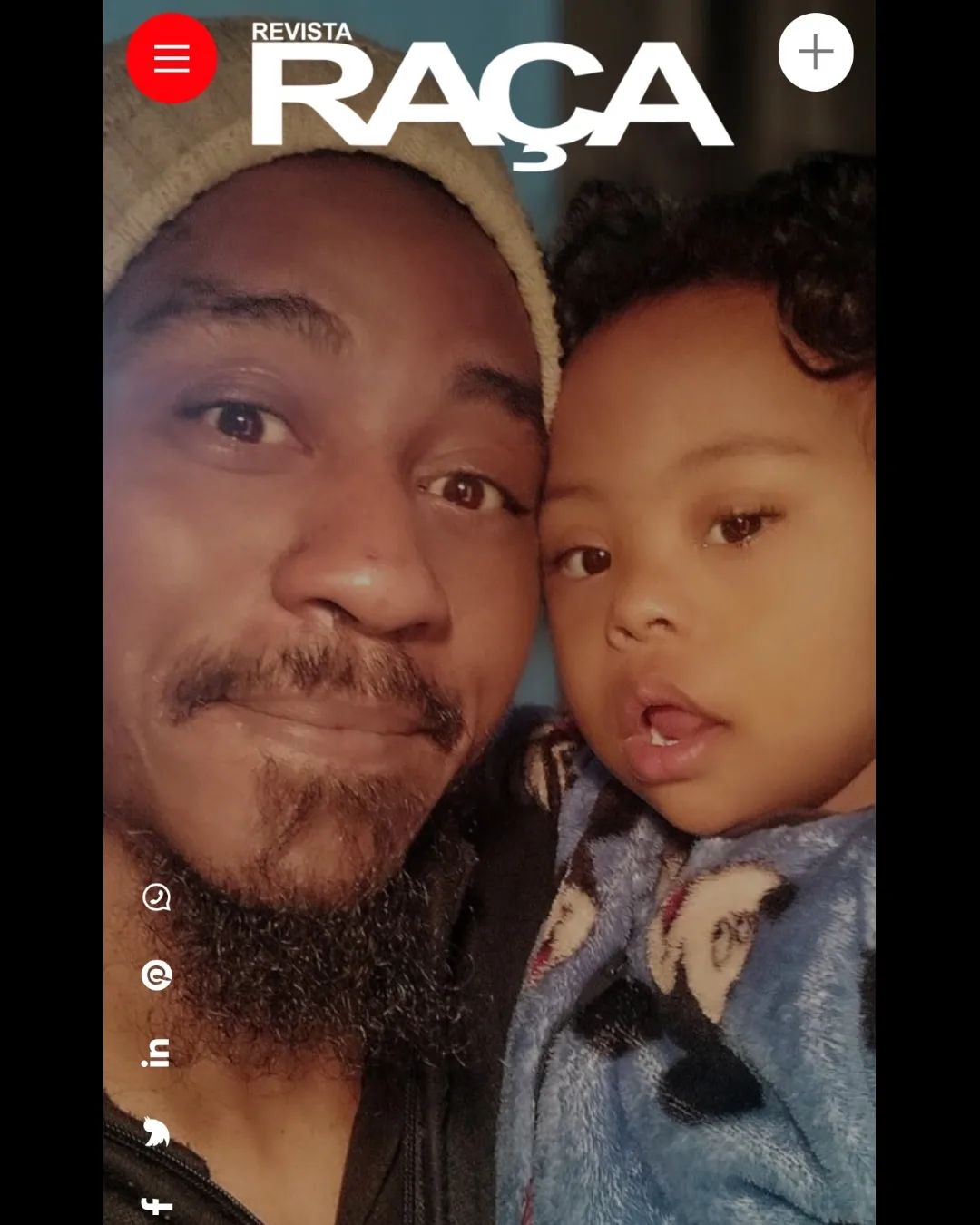


At the heart of the InvisibiliDown Institute beats a profound truth: that every life deserves to be seen, celebrated, and have its rights guaranteed. The organization's story does not begin in an office or within a business plan, but in the personal journey of a father, Thiago Ribeiro, whose love for his son, Noah, opened his eyes to a reality that many in society prefer to ignore. The birth of Noah, a Black boy with Down Syndrome, was the seed that planted InvisibiliDown’s mission, transforming an individual experience into a comprehensive social movement.
Thiago Ribeiro’s lived experience with his son Noah is more than a moving anecdote; it represents the authentic catalyst for a significant social movement. By experiencing firsthand the intersection of race and disability, Thiago was able to identify a systemic gap and the specific barriers faced by this population. This direct engagement with the reality of Black and Indigenous people with Down Syndrome revealed the urgent need for an organization dedicated to tackling invisibility and discrimination. Rooted in this personal experience, the institute’s foundation lends its philosophy undeniable authenticity, empathy, and credibility, ensuring that its work remains deeply connected to the reality of those it serves.
The InvisibiliDown Institute was founded to confront a persistent and painful challenge: the myth that the Black population is immune to Down Syndrome. This misconception is not merely a factual error; it acts as a veil that obscures the existence of thousands of people, denying them visibility, recognition, and consequently, access to fundamental rights and opportunities. It is a manifestation of racism and ableism that silences voices and erases their presence. At the InvisibiliDown Institute, the refusal to accept this invisibility is the central pillar of its philosophy.
The perpetuation of the 'immunity myth' has profound implications, resulting in a 'double invisibility' for Black and Indigenous individuals with Down Syndrome. They are frequently marginalized both within the prevailing discourse on disability—which is often centered on white populations—and within their own racial communities, where the condition may be less discussed or understood due to this very belief. This dual marginalization translates into a scarcity of culturally competent support, specific resources, and targeted advocacy efforts. InvisibiliDown’s philosophy, therefore, is a multifaceted struggle for existence and full rights, seeking to dismantle these barriers and ensure that human dignity has neither color nor condition.
The mission of the InvisibiliDown Institute is an unwavering commitment to guaranteeing rights and promoting full inclusion for Black and Indigenous people with Down Syndrome. The organization fights tirelessly to deconstruct prejudices, tear down barriers, and build a future where diversity is celebrated in all its forms. This commitment goes beyond mere awareness; it manifests in the active pursuit of social justice and equity.
The InvisibiliDown Institute’s actions are grounded in strategic pillars that aim to transform invisibility into full presence and empowerment.
Believing in the transformative power of imagery and storytelling, the InvisibiliDown Institute uses art as an essential tool to bring to light the stories, faces, and lives that have been historically ignored. Through photography and artistic projects, the organization fosters representation and challenges the dominant narrative. The exhibition project 'InvisibiliDOWN – Essays on Racism and Down Syndrome' is a clear example of this approach. Furthermore, the 'Global Photography Book' initiative—which will document Black and Indigenous families with Down Syndrome worldwide—aims to further extend the reach of this message, affirming the existence and beauty of these lives.
The use of art and photographic documentation goes far beyond mere 'awareness.' These initiatives are acts of creation and the affirmation of existence. By filling the visual and narrative gap created by the 'immunity myth' and discrimination, the institute not only combats invisibility but also produces an irrefutable record of the diversity and presence of these individuals. This visual material serves as a powerful advocacy tool, providing tangible evidence for the defense of rights and the promotion of more inclusive public policies. Art, in this context, transcends its aesthetic function and becomes a strategic instrument for social transformation and the effective safeguarding of rights.
The InvisibiliDOWN Institute understands that no one should walk alone. Empowerment begins with connection, mutual care, and the sharing of experiences. For this reason, the organization fosters the creation of support communities, with a special focus on Black mothers, where they can strengthen one another, exchange knowledge, and find the support needed to care for their families and fight for their rights.
The establishment of these communities, particularly for Black mothers, is an act of empowerment that actively combats the isolation and invisibility these families may face. In a context where the 'immunity myth' can lead to a lack of recognition and specific support, the union of these families validates their shared experiences and creates a safe space for the exchange of vital information and emotional support. This initiative not only provides individual support but also builds a solid foundation for collective action. By sharing their stories and identifying common needs, these families are able to amplify their voices, transforming individual experiences into a unified force for advocacy and social change. It is a grassroots strategy that complements and strengthens advocacy efforts at broader levels.
The InvisibiliDOWN Institute’s work transcends mere awareness and direct support. The organization positions itself as a tireless advocate for human rights, working to influence public policy and promote structural changes within society. Thiago Ribeiro, the institute’s founder, is a recognized human rights activist and an Ambassador for the Jô Clemente Institute (formerly APAE de SP), which reflects a commitment to advocacy at institutional levels. The institute acts as an ambassador for inclusion, engaging with various institutions and society at large to ensure that the voices of people with Down Syndrome—especially Black and Indigenous individuals—are heard and their needs are addressed.
The InvisibiliDown Institute dreams of a world where the myth of invisibility is but a distant memory. A future where every person with Down Syndrome, regardless of their color or origin, is recognized in their fullness, with their rights respected and their contributions valued. It is the vision of a future where racism and ableism find no place, and diversity is the norm, not the exception.
The InvisibiliDOWN Institute is more than an organization; it is a movement. It is a call for everyone to join this journey of unveiling invisibility and building a fairer and more humane future. The presence, support, and voice of every individual are fundamental to making this dream a reality.
At the heart of the InvisibiliDOWN Institute beats an urgent purpose: to unveil the truth and combat the injustice that silences and diminishes lives. We exist because the reality of Black and Indigenous individuals with Down Syndrome—marked by a 50% lower life expectancy due to systemic inequities—can no longer be ignored. Our purpose is to be the lens that illuminates what has been hidden, the data that challenges prejudice, and the voice that calls for equity and dignity for all.
Our vision is a world where race and disability do not determine one’s destiny. We dream of a society where every Black and Indigenous individual with Down Syndrome is fully visible and valued, with unrestricted access to all rights and opportunities, living a dignified and equitable life. A future where inclusion is not just a goal, but an intrinsic reality.
O Instituto InvisibiliDOWN combate a invisibilidade interseccional e as disparidades sistêmicas através da fotografia documental, pesquisa aprofundada e advocacia direta. Geramos conhecimento e narrativas que influenciam políticas públicas, promovem a inclusão real e catalisam a transformação social para uma vida digna e equitativa.
Nossas ações são guiadas por um conjunto de princípios fundamentais que refletem nossa identidade e nosso compromisso.
Combater a invisibilidade interseccional e as disparidades sistêmicas que afetam indivíduos negros, indígenas e periféricos com Síndrome de Down, transformando indignação em políticas públicas eficazes e garantindo plena cidadania.
A pauta da pessoa negra com deficiência é ignorada tanto pelo movimento de justiça racial quanto pelo movimento de inclusão (centrado em experiências brancas).
O conceito que cunhamos para definir a exclusão racial sutil que opera *dentro* dos espaços de inclusão, por meio de vieses e falhas estruturais.
Essa exclusão tem um custo real: a expectativa de vida de pessoas negras com SD é até 50% menor, não por biologia, but por falta de acesso a cirurgias, diagnósticos e terapias.
Usamos uma estratégia de 3 pilares para criar uma mudança sistêmica, como detalhado na Nova Arquitetura de Marca.
Usamos a fotografia documental e exposições para humanizar os dados, combater a invisibilidade simbólica e sensibilizar o grande público.
Geramos autoridade científica através da Pesquisa Nacional e do app InvisibiliDADOS, criando a evidência necessária para a luta.
Atuamos em conselhos e capacitamos gestores e profissionais (InvisibiliLEARN) para transformar os dados em políticas públicas eficazes.
Nossa credibilidade é construída através de parcerias estratégicas e participação ativa em espaços de decisão (Fonte: Biografia).
do Instituto Jô Clemente (Antiga APAE de SP)
do Observatório de Saúde da População Negra (Fiocruz/MS)
de Comunicação da Federação Brasileira das Associações de SD
Nosso trabalho pioneiro tem sido reconhecido por seu mérito artístico e profundo impacto social, validando a urgência da nossa causa em nível nacional e internacional.
Nossa mensagem está alcançando o grande público através de veículos de mídia de renome.
Nossa missão depende de aliados. Apoie nosso trabalho de pesquisa, advocacy e arte para garantir que a inclusão seja, de fato, para todos.
Apoie o Instituto